Air Duct Sealing in Southlake TX
A Practical Way to Stop Energy Loss and Improve Comfort
Most homeowners don’t realize how much money slips away through their air ducts. It happens quietly—little gaps in the attic, loose connections behind walls, or sections of ductwork that have pulled apart over time. Before long, the HVAC system is running harder than it should, rooms never feel quite right, and energy bills start climbing for no obvious reason.
We see this all the time here in Fort Worth. The heat, the age of certain homes, and the way attic ductwork expands and contracts throughout the year all work against your efficiency. That’s why air duct sealing has become one of the most straightforward ways to make a home more comfortable without replacing equipment.
At D.T.M. Heating and Air Conditioning, we’ve helped countless homeowners get their airflow back on track through proper duct sealing—and the results are usually noticeable within days, not weeks.
Why Air Duct Sealing Matters in Fort Worth, TX
When your ducts run through a hot attic, any leak becomes a problem. Cold air escapes into that space, and your system has to run longer to cool your home. In some cases, 20–40% of conditioned air never even reaches the living areas. That’s energy you already paid for, simply disappearing.
Some of the most common issues we see in Fort Worth include:
- Rooms that stay warm even with the AC running
- A system that never seems to shut off
- Constant dust buildup
- A general feeling that the home is “stuffier” than it used to be
- Utility bills creeping upward
Homeowners often assume they need a larger HVAC unit. In many cases, sealing the ductwork fixes the underlying issue at a fraction of the cost.
Signs Your Air Ducts Probably Need to Be Sealed
What signs indicate my air ducts need sealing?
This is one of the most frequent questions we hear, and the truth is that duct leaks tend to blend in with other HVAC problems. Still, there are a few reliable signs that something is going on:
Uneven temperatures from room to room
When one bedroom is five degrees warmer than the rest of the home, it’s usually an airflow issue—and leaks are a major culprit.
Higher energy bills without a clear reason
If your usage suddenly jumps, your ducts may be wasting energy long before the air reaches your vents.
Dust accumulation that came out of nowhere
A leaky return duct can pull attic dust, insulation fibers, or even crawl space air right into your system.
Noisy air movement
Sometimes leaks whistle or hiss, especially around loose joints.
Visible damage or disconnected sections
If you spot sagging ducts or a seam that’s clearly open, you’re losing air.
A system that can’t keep up
You may notice the AC runs longer and longer each season, even on mild days. That’s often a sign your air isn’t making it where it’s supposed to.
free new install estimates
How Often Should You Have Your Ducts Checked?
Most homes benefit from a duct inspection every two to three years. However, homes with older systems, past renovation projects, or extensive attic ductwork may need inspections a bit more often.
Here are a few situations that call for earlier checkups:
- After installing new HVAC equipment
- After attic insulation or remodeling
- If someone in the home suffers from allergies
- If the home is 20+ years old
- If your HVAC contractor has mentioned airflow restrictions in the past
A quick inspection every couple of years can prevent major air loss down the road.
What Actually Happens During the Duct Sealing Process?
What is involved in the duct-sealing process?
The steps are straightforward, but the results are significant. Here’s what duct sealing typically looks like when we perform it:
A Thorough Examination of Your Ductwork
We start by checking the entire duct system—supply lines, returns, attic runs, and connections to the air handler. We look for loose seams, holes, compressed sections, and areas where the duct has separated from the boot or plenum. Airflow readings and pressure testing can help us pinpoint issues faster.
Locating the Leaks, Large and Small
Some leaks are obvious. Others hide under insulation or behind joints that look fine from the outside. When needed, we use tools like infrared imaging or pressure diagnostics to find the smaller, slower leaks.
Applying the Seal
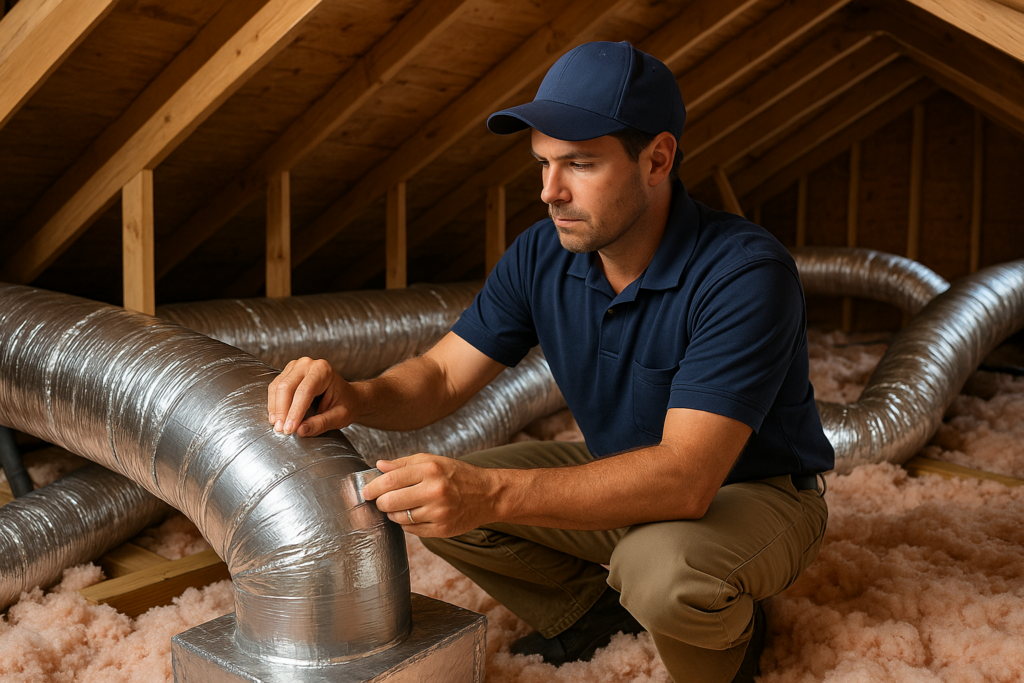
Once we know where the leaks are, we seal them using materials designed for HVAC ductwork—not regular tape. Mastic (a thick sealant) is the most common because it’s durable and holds up to the extreme attic temperatures here in Texas.
We seal:
- joints and seams
- connection points
- elbows
- boot connections
- gaps in older sheet metal ducts
If sections are crushed, disconnected, or poorly designed, we discuss repair or replacement options before sealing.
Reinforcing and Insulating Where Needed
Sometimes the leak stems from poor support or collapsed ductwork. If your ducts need reinforcement, or if insulation is missing in critical areas, we address that as well.
Final Testing to Make Sure Everything Worked
We don’t just seal the ducts and walk away. We check airflow again to confirm improvements and ensure that the air is reaching each room the way it should.
What You Gain From Proper Air Duct Sealing
Most homeowners notice several improvements right away—especially during our hot summers.
Lower monthly energy bills
If your ducts were leaking heavily, sealing them can significantly reduce waste.
More consistent temperatures throughout the home
Rooms that used to be warm in the afternoon often become the most comfortable after sealing.
Cleaner indoor air
Stopping leaks means less dust and fewer contaminants entering the system.
Less strain on your HVAC system
A system that doesn’t have to fight against duct leaks runs easier and tends to last longer.
A quieter HVAC system
Small leaks can cause whistling or popping sounds. Sealing often reduces or eliminates those noises.
Ready to Improve Your Home’s Comfort?
If you’re dealing with inconsistent temperatures, rising bills, dusty rooms, or an HVAC system that’s constantly running, it may be time to look at your ductwork. Air duct sealing is one of the most effective—and budget-friendly—ways to improve comfort and efficiency.
You’re welcome to give us a call at (817) 386-5471 or reach us through our contact page at https://dtmpro.com/contact-us/. We’re here to help you make your home more comfortable, efficient, and healthy.
FAQ
Q: How long does duct sealing usually take?
A: Most homes can be completed within three to six hours, depending on accessibility and how many leaks we find.
Q: Will duct sealing help reduce allergies? A: In many cases, yes. Sealing cuts down on dust, insulation debris, and other pollutants that may be entering your system.
Q: Is the process messy? A: Not at all. Duct sealing is relatively clean and doesn’t require tearing apart walls or floors.
Q: Do ducts ever need to be replaced instead of sealed? A: If the ducts are extremely old, crushed, or incorrectly sized, replacement may make more sense. But most systems respond very well to sealing.
Q: Does sealing make the HVAC system quieter? A: Often it does. Leaks can create a surprising amount of noise.
Testimonials